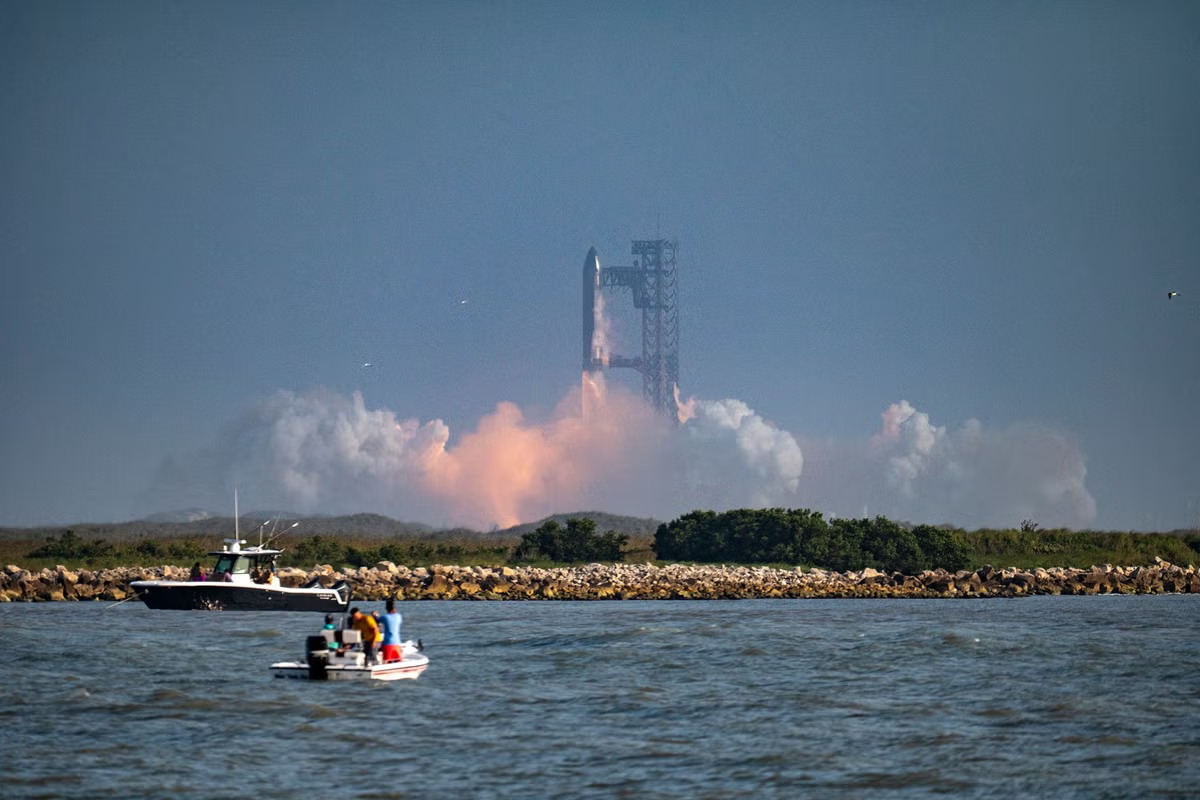
Homeowners File Lawsuit Against SpaceX Over Structural Damages
Dozens of residents in South Texas have officially filed a lawsuit against Elon Musk’s SpaceX, alleging that the aerospace giant’s operations have caused significant damage to their private properties.
The lawsuit, which represents approximately 80 homeowners, claims that intense sonic booms and rocket testing at the Starbase facility in Boca Chica have resulted in “gross negligence and trespassing.”
Homeowners report that the vibrations and atmospheric pressure changes from repeated rocket activities have led to cracked walls, shattered windows, and compromised roofing structures.
Legal documents specifically highlight 11 rocket tests conducted between April 2023 and October 2025 as the primary cause of the alleged structural failures.
Chronology of Rocket Test Incidents and Damage
The plaintiffs point to specific events where the intensity of SpaceX’s operations exceeded the structural endurance of local residential buildings.
- April 2023 Launch: A Starship rocket launch famously destroyed its own launch pad, propelling debris up to three-quarters of a mile away from the site.
- Testing Frequency: Residents claim the frequency of testing intensified between 2023 and late 2025, leading to cumulative damage over time.
- Sonic Booms: Massive sonic booms generated during rocket re-entry and testing phases are cited as the main source of home vibrations.
The residents seek an unspecified amount in monetary damages to cover the repair and restoration of their homes, emphasizing that the SpaceX rocket testing has transformed their living environment into a high-risk zone.
FAA Authorization and Local Displacement
Despite the growing tension with local residents, federal authorities have recently granted SpaceX further expansion rights in the South Texas region.
The Federal Aviation Administration (FAA) authorized SpaceX to increase its launch schedule from South Texas to a maximum of 25 launches per year starting in 2025.
This decision marks a significant five-fold increase from previous limits, a move that has further fueled the ongoing disputes between the aerospace company and the local community.
Residents argue that the FAA’s approval did not sufficiently account for the physical and environmental toll on the neighboring population and infrastructure.
Technological Momentum Amid Legal Challenges
While battling legal hurdles in Texas, SpaceX continues to push its global operations forward with multiple successful missions from other launch sites.
The company recently completed a high-profile mission using the Falcon Heavy rocket to launch the ViaSat-3 F3 satellite, intended to boost broadband coverage in the Asia-Pacific region.
This specific launch highlighted SpaceX’s technical capability, as the Falcon Heavy returned to flight to deploy a payload with over 1 Tbps of data capacity.
In addition to heavy-lift missions, SpaceX has maintained a rapid pace for its Falcon 9 fleet, focusing on international and telecommunications payloads.
- South Korean Payload: On May 3, a Falcon 9 launched from Vandenberg Space Force Base carrying the CAS500-2 satellite.
- Satellite Deployment: The California launch successfully placed a total of 45 satellites into orbit within a single mission.
- Broadband Expansion: The deployment included 44 additional payloads alongside the primary South Korean satellite to bolster global connectivity.
Information regarding the Aerospace Industry Lawsuits suggests that these legal actions could potentially impact the operational timelines for future terrestrial testing.
Space exploration legal standards are becoming a focal point as private companies ramp up the frequency of launches near residential hubs.
SpaceX Financial Trajectory and IPO Speculation
The contrast between local legal battles and global financial dominance is stark as market observers track SpaceX’s move toward commercial viability.
SpaceX has remained a private entity to maintain flexibility in decision-making, particularly regarding projects with uncertain timelines like the Starship program.
However, intense speculation regarding a potential Initial Public Offering (IPO) continues to grow among global investors and financial institutions.
The company’s valuation has seen consistent growth through private investment rounds, reducing its reliance on public markets for capital deployment.
| Key Financial Driver | Strategic Importance |
|---|---|
| Starlink Subscriptions | Provides predictable, recurring revenue for public market stability. |
| NASA Partnerships | Ensures stable income streams and adds operational credibility. |
| Reusable Technology | Significantly lowers the cost per launch for commercial contracts. |
Analysts suggest that Starlink could potentially be listed as an independent entity before the broader SpaceX company goes public.
This strategy would allow the parent company to preserve its operational mindset for deep-space exploration while offering investors a high-growth segment.
Strategic signals, including leadership communication and internal structural changes, are being monitored as indicators of a shifting IPO timeline for 2026.
Market signals for private aerospace firms indicate that macroeconomic stability and investor appetite for tech infrastructure will dictate the timing of any listing.
Operational Outlook and Launch Schedules
SpaceX is scheduled to maintain its aggressive launch cadence throughout the remainder of 2026, with multiple missions planned from both Texas and California.
The launch of 45 satellites from Vandenberg Space Force Base on May 3 utilized a 37-minute launch window, showcasing the company’s refined ground operations.
Despite the legal pressure from 80 homeowners in Texas, the company is moving forward with infrastructure expansions to support the increased launch limits granted by the FAA.
The outcome of the Texas lawsuit remains pending, but it represents a critical intersection between rapid aerospace advancement and the property rights of local citizens.
SpaceX’s current revenue diversification, which includes defense collaborations and global satellite-based services, provides a robust financial buffer against localized legal setbacks.