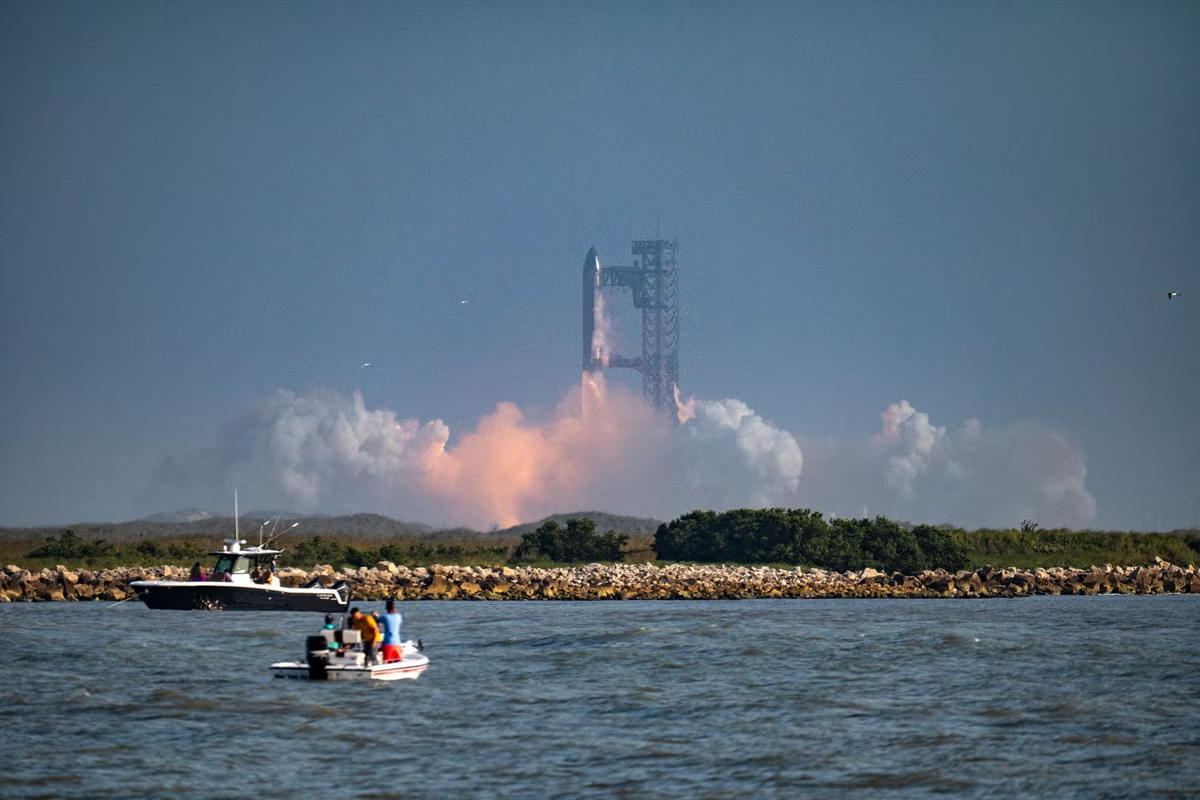
SpaceX Returns Falcon Heavy to Flight for ViaSat-3 Mission
SpaceX has successfully launched its Falcon Heavy rocket, marking a significant return for the triple-core booster after an 18-month hiatus.
The mission, which took place from Launch Complex 39A at NASA’s Kennedy Space Center, was dedicated to deploying the ViaSat-3 F3 satellite.
This triumphant power launch is designed to transform broadband connectivity across the Asia-Pacific region by boosting data capacity.
The Falcon Heavy is one of the world’s most powerful operational rockets, consisting of three Falcon 9 engine cores strapped together.
Technical Specifications and Mission Impact
The ViaSat-3 F3 satellite is a massive communications payload intended to provide high-speed internet to remote and underserved areas.
- Satellite Capacity: Over 1 Tbps (Terabit per second) of total network capacity.
- Coverage Area: Primary focus on the Asia-Pacific region and surrounding maritime zones.
- Launch Vehicle: SpaceX Falcon Heavy, featuring 27 Merlin 1D engines at liftoff.
- Orbital Destination: Geostationary Transfer Orbit (GTO).
This mission highlights SpaceX’s ability to handle extremely heavy payloads that require the additional thrust provided by the Heavy Space Launch Vehicle configuration.
The successful deployment ensures that ViaSat can continue its global expansion of terabit-class broadband services.
Falcon 9 Completes Major Rideshare Mission from California
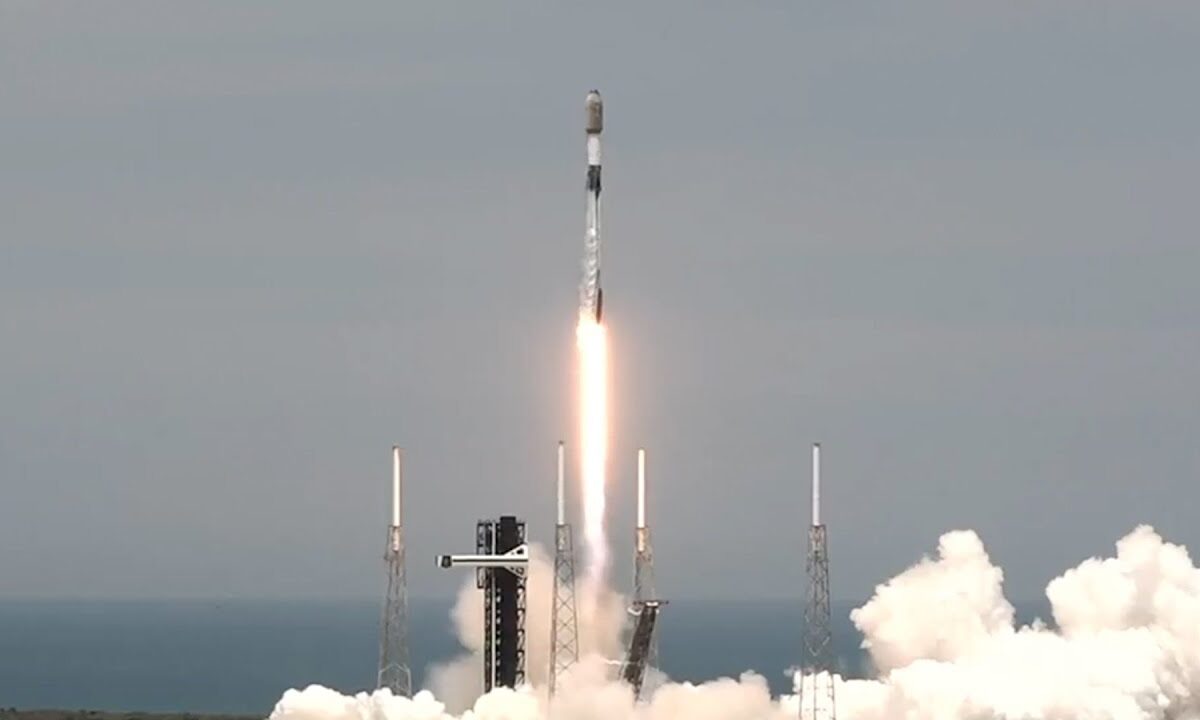
While the Falcon Heavy dominated the East Coast, SpaceX simultaneously managed a high-volume rideshare mission from the West Coast.
A Falcon 9 rocket lifted off from Vandenberg Space Force Base in California early on Sunday morning, May 3, 2026.
This specific launch was tasked with carrying a total of 45 satellites into orbit for various international and commercial partners.
The mission was scheduled for a precise 37-minute launch window to ensure all payloads reached their designated sun-synchronous orbits.
Key Payloads on the Falcon 9 Mission
The primary payload for this California-based launch was the CAS500-2 satellite, a significant asset for South Korean space interests.
- CAS500-2: A South Korean remote sensing satellite designed for high-resolution Earth observation.
- Total Payload Count: 45 individual satellites, including cubesats and microsats.
- Launch Location: Space Launch Complex 4 East (SLC-4E) at Vandenberg.
- Mission Type: Dedicated rideshare, allowing multiple customers to share the cost of a single flight.
South Korea continues to expand its presence in space, utilizing SpaceX’s frequent launch cadence to deploy its Advanced Satellite Technology into polar orbits.
The CAS500-2 satellite will provide critical data for land management, disaster monitoring, and environmental tracking for the Korean peninsula.
SpaceX Launch Schedule and Operational Highlights
The rapid succession of launches underscores SpaceX’s dominant position in the global launch market and its commitment to a high-frequency schedule.
By conducting launches from both Florida and California within a narrow timeframe, the company demonstrates massive logistics and engineering capabilities.
The following table summarizes the key details of the two distinct missions occurring during this period:
| Feature | Florida Mission (Kennedy) | California Mission (Vandenberg) |
|---|---|---|
| Rocket Used | Falcon Heavy | Falcon 9 |
| Primary Payload | ViaSat-3 F3 | CAS500-2 |
| Total Satellites | 1 Large Satellite | 45 Small Satellites |
| Launch Date | May 3, 2026 | May 3, 2026 |
The Falcon 9 core used in the Vandenberg mission performed a successful return-to-earth maneuver following the stage separation.
This allows SpaceX to refurbish the booster for future flights, maintaining their industry-leading reusability standards.
Mission Timeline and Launch Window Details
Preparation for the Sunday morning launch at Vandenberg involved rigorous checks of the Falcon 9’s 45-satellite stack.
- Pre-Launch Prep: Teams finalized the integration of the CAS500-2 weeks before the Sunday window.
- Weather Conditions: Early morning skies in South Texas and California provided optimal visibility for tracking.
- Engine Ignition: The Falcon 9 ignited its nine Merlin engines exactly at the start of the 37-minute window.
- Payload Deployment: Satellites began their deployment sequence approximately one hour after liftoff.
The deployment process for rideshare missions is particularly complex, as each of the 45 satellites must be released at specific intervals to avoid collisions.
SpaceX utilizes a specialized “dispenser” system that manages the timing and trajectory of each small satellite during the orbital insertion phase.
Future Outlook for SpaceX Heavy Lift Operations
The return of the Falcon Heavy signals a new phase of heavy-lift operations for commercial customers like ViaSat and government agencies.
As broadband demands increase globally, the need for larger, more powerful satellites in geostationary orbit continues to grow.
SpaceX remains the primary provider for these specialized missions, offering a unique combination of power and cost-efficiency.
Meanwhile, the success of the CAS500-2 launch reinforces the company’s strong partnership with international space programs seeking reliable access to orbit.
With dozens more launches planned for the remainder of 2026, SpaceX’s launch sites in Florida and California will remain among the busiest in the world.
The integration of massive projects like the ViaSat-3 constellation and international rideshares shows no signs of slowing down as the company pushes toward new records.