Rising Challenge of Fiber-Optic Drone Warfare in Southern Lebanon
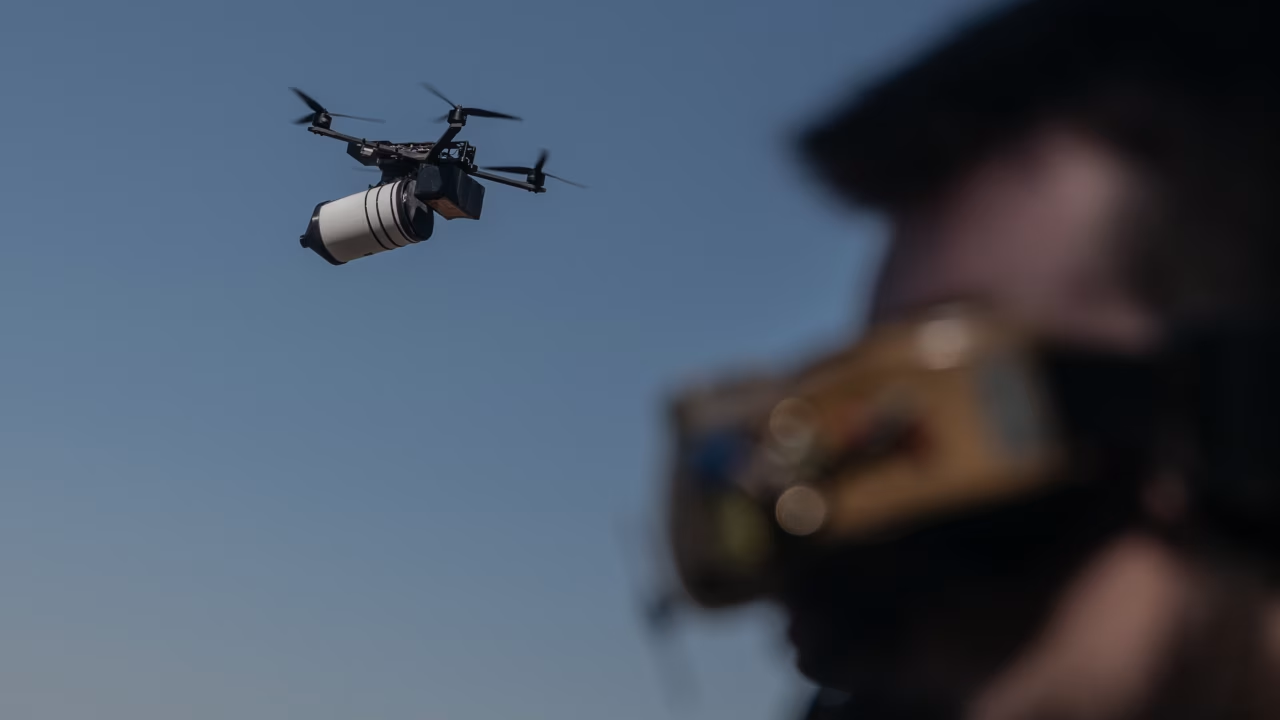
Explosive drones have emerged as the Israel Defense Forces’ (IDF) most significant operational challenge in southern Lebanon. These systems represent a shift in the local threat landscape.
Recent developments indicate that the introduction of drones controlled via fiber-optic cables is neutralizing traditional electronic defenses. This physical connection bypasses standard countermeasures.
For several months, this technology has loomed as a potential threat. Military analysts suggest it could be deployed at any moment to strike anywhere within operational range.
The core issue for the IDF is the move away from radio-frequency reliance. Without a wireless signal to intercept, conventional jamming equipment becomes obsolete on the modern battlefield.
The Mechanics of Fiber-Optic Guidance
Fiber-optic drones utilize a physical spool of glass fiber that connects the aircraft directly to the operator. This creates a hardwired data link between the two points.
This method of control offers distinct tactical advantages over traditional wireless drones:
- Jamming Immunity: The physical wire cannot be disrupted by electronic warfare signals or frequency jamming.
- High-Resolution Feedback: Operators receive a clear, uncompressed video feed that is not subject to signal degradation.
- Stealth Profile: The drone does not emit radio signatures, making it difficult for electronic intelligence to detect.
- Terminal Precision: The lack of signal lag allows for pinpoint accuracy during the final stages of an attack.
According to current reports, the use of precision-guided unmanned systems is forcing a rapid evolution in defensive tactics. Physical interception is often the only remaining option.
Limitations of Wired Control Systems
While the fiber-optic link provides high security, the physical nature of the cable introduces several operational constraints for the user.
- Range Restrictions: The flight distance is strictly limited by the length of the fiber-optic cable on the spool.
- Environmental Hazards: The cable can easily become entangled in trees, buildings, or other obstacles during low-altitude flight.
- Payload Capacity: The weight of the spool reduces the amount of explosives or specialized sensors the drone can carry.
The Emerging Threat of Cellular-Linked Systems
Military sources indicate that fiber-optic drones are only the beginning. A broader strategic threat involves drones that leverage existing cellular infrastructure for control.
Iranian-backed technology is reportedly shifting toward drones equipped with SIM cards and cellular modems. This allows the devices to operate over standard mobile networks.
Using cellular networks provides several strategic benefits to hostile actors:
- Infrastructure Stealth: Drone signals blend in with thousands of civilian mobile phones, making identification nearly impossible.
- Extended Range: As long as there is cellular coverage, the drone can be controlled from virtually any distance.
- Decentralized Command: An operator could potentially be located in a different country while guiding a drone through a local cell tower.
This reliance on advanced regional defense technology means that military forces must find ways to combat threats that hide within civilian communication bands.
Comparing Modern Drone Control Methods
| Control Type | Signal Method | Primary Weakness |
|---|---|---|
| Traditional RF | Radio Waves | Highly susceptible to jamming |
| Fiber-Optic | Physical Cable | Range and entanglement risks |
| Cellular/SIM | Mobile Network | Requires proximity to cell towers |
A Deadly New Strategic Landscape
The convergence of fiber-optic precision and cellular range creates a multifaceted threat. Security experts describe this as a strategic headache for defenders in northern Israel.
The “bigger threat” mentioned by officials involves the unpredictable nature of these systems. Unlike traditional artillery, these drones can loiter and select targets with high autonomy.
The IDF’s current focus is on developing new detection methods that do not rely on radio frequency. This includes acoustic sensors and advanced optical tracking to spot drones before impact.
The threat is no longer limited to the front lines. With cellular technology, a drone could theoretically be launched from a hidden location and navigate deep into interior territories.
Defensive Dilemmas in the North
Defensive forces face a paradox when dealing with cellular-linked drones. Shutting down the mobile network to stop a drone would also disable civilian and military communications.
This “anywhere, anytime” capability means that standard air defense bubbles may have gaps that these low-cost technologies can exploit. The cost of a fiber-optic drone is significantly lower than the missiles used to shoot them down.
- Cost Asymmetry: Inexpensive drones require expensive interceptors.
- Detection Gap: Traditional radar often struggles with small, low-flying objects made of plastic or carbon fiber.
- Operational Stress: The constant presence of “silent” drones creates a psychological toll on ground troops.
The situation in southern Lebanon serves as a testing ground for these new warfare tactics. The results of these technological clashes will likely influence global drone defense strategies in the coming years.
Military leaders are calling for a complete overhaul of electronic warfare doctrines. The era of simple jamming is ending as physical and civilian-networked links take over the sky.

Charles D. Whitfield
Charles D. Whitfield covers the full spectrum of American life—from breaking news and sports to entertainment, lifestyle, business, and tech. A sharp observer with a direct voice, he specializes in capturing trending stories as they happen, bringing clarity to complex issues and energy to every topic he touches.