Philippine Peso Plummets to Shocking New Record Low Against US Dollar
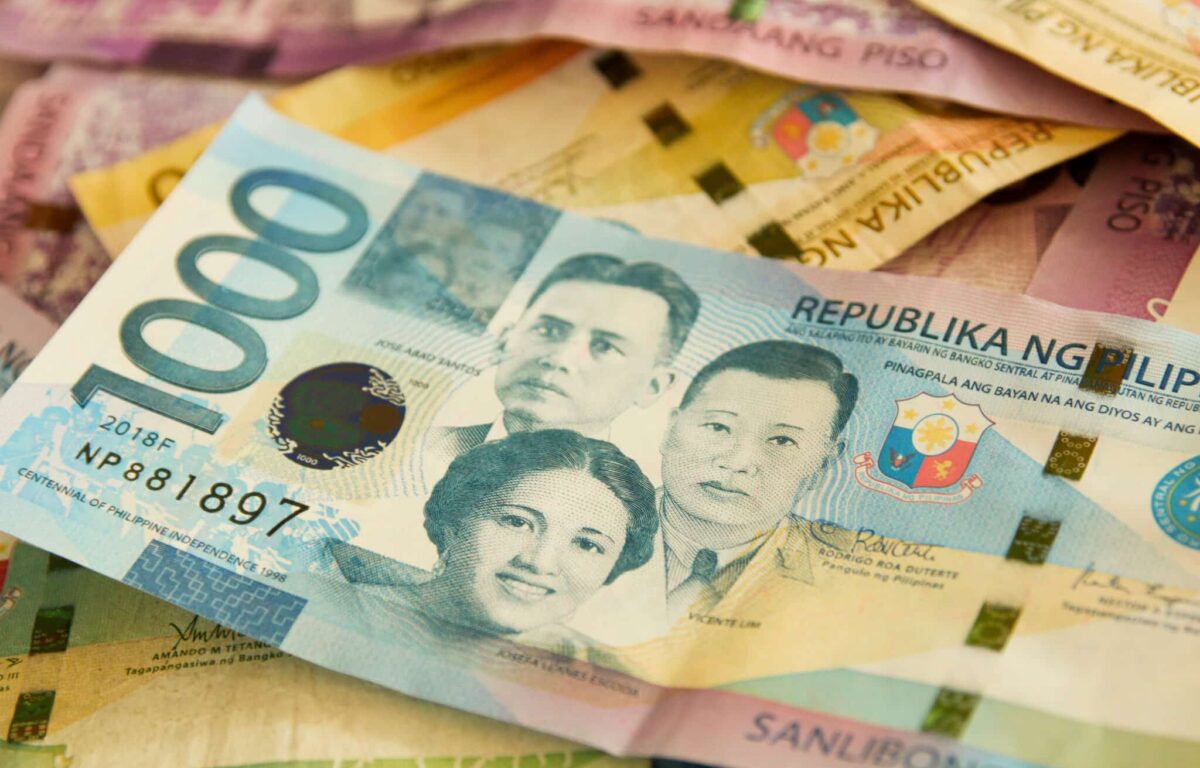
The Philippine peso closed the week by sinking to an unprecedented record low against the US dollar as global macroeconomic pressures and local domestic challenges continue to weigh heavily on the local currency.
According to official data from the Bankers Association of the Philippines, the local currency weakened by 8.1 centavos from its previous record low to finish the trading week at 61.721 against the greenback.
Market tracking during the trading session showed that the local unit briefly slid to a steeper intraday low of 61.73 before trimming minor losses by the closing bell.
The latest drop underscores a persistent downward trend for the currency, which has continually breached key barriers in recent weeks due to shifting international financial conditions.
A breakdown of recent historical levels highlights the escalating structural pressure on the local currency over the past month:
- April 30, 2026: The peso recovered slightly to 61.485:$1 after touching an earlier intraday low, only to be pounded back down to a new low of 61.75:$1 later in the day.
- May 14, 2026: Political risks and a strengthening greenback pushed the currency to another record low.
- May 15, 2026: The currency continued its downward slide, hitting 61.64:$1 before cascading to the current weekend close.
Federal Reserve Outlook and Resurgent Dollar Fuel Declines
The main driver behind the rapid depreciation is a resurgent US dollar, which has gained significant momentum following recent macroeconomic data releases from Washington.
Market analysts note that the dollar climbed more than 1 percent over the course of the week, marking its sharpest weekly gain since early March.
This surge coincided with US Treasury yields climbing to one-year highs, drawing capital away from emerging market assets and toward American debt instruments.
A market trader explained that consumer and producer inflation readings released in the United States have reinforced expectations that the Federal Reserve will keep borrowing costs elevated for a prolonged period.
With US inflation continuing to run hotter than anticipated, global investors are pricing in the reality that a highly anticipated monetary easing cycle may be delayed or scaled back entirely this year.
The ongoing high-interest-rate environment in the United States continues to bolster the greenback, prompting intense global risk aversion that naturally penalizes emerging market currencies like the peso.
Geopolitical Tensions and Regional Economic Downgrades
Compounding the monetary policy outlook is the ongoing conflict in the Middle East, which has severely disrupted global supply chains and logistically threatened nearly 20 percent of global oil flows through the Strait of Hormuz.
According to a research brief by London-based Oxford Economics, the prolonged geopolitical crisis could push the Philippine economy toward its weakest expansion since the 2009 global financial crisis, when factoring out the anomalous 2020 pandemic slump.
Oxford Economics drastically slashed its average growth forecast for the Philippines this year to 3.5 percent, a steep drop from its previous projection of nearly 6 percent.
The research group pointed out that surging inflation is squeezing domestic spending in a nation whose economic engine is predominantly driven by household consumption.
Despite the sharp reduction, a broader regional look shows that the revised 3.5-percent growth target would still place the country ahead of several advanced and developing Asian economies:
- South Korea: Projected growth of 2.5 percent.
- Singapore: Projected growth of 2.3 percent.
- Australia: Projected growth of 2.1 percent.
- Thailand: Projected growth of 1.4 percent.
- Japan: Projected growth of 0.3 percent.
Remittance Growth Decelerates to Three-Year Low
The macroeconomic headwinds have directly manifested in the country’s vital inflows, as growth in cash remittances from overseas workers slowed down dramatically.
Data from the Bangko Sentral ng Pilipinas revealed that cash remittances coursed through banks grew by just 2.3 percent year-on-year to $2.87 billion, marking the weakest pace of expansion since June 2023.
Economic experts link this deceleration directly to the rising cost of living and elevated inflation within host economies, which is limiting the capacity of overseas Filipinos to send extra funds home.
For the first quarter, total cash remittances stood at $8.68 billion, representing a 2.8 percent increase and accounting for roughly 7.4 percent of the country’s gross domestic product.
While the weaker peso has helped boost the nominal conversion value of the sent funds upon arrival, this benefit has been largely neutralized by tighter financial conditions and slower global growth.
Despite the clear deceleration, the central bank maintained its full-year remittance growth forecast of 3 percent, reiterating that these inflows remain a fundamental pillar of national external stability.
Trading Volumes and Central Bank Intervention Dynamics
As the currency faced severe selling pressure, activity in the foreign exchange market slowed down compared to previous sessions.
Trading volume via the Bankers Association of the Philippines eased to $1.2 billion, dropping from the $1.6 billion recorded during the prior trading session.
Market participants indicate that local political uncertainties and fundamental domestic economic challenges are leaving the currency highly vulnerable to further drops.
Traders anticipate that occasional central bank intervention will likely occur along key defense levels to smoothen out extreme volatility and prevent an unraveled depreciation.
The broader local financial sector is also reflecting this cautious environment, with the Philippine Stock Exchange Index dropping back below the psychologically critical 6,000 mark.
Corporate earnings have started showing structural pressure from the weak currency and elevated inflation, with major food conglomerates and holding firms reporting lower margins due to soaring direct raw material costs.
Structural Buffers Offer Defense Against Full Crisis
While the current slide has raised concerns, economic analysts emphasize that the Philippines maintains vastly superior defensive buffers compared to historical crisis periods like the late 1970s and 1980s.
The country’s current Gross International Reserves stand robustly at approximately $113.3 billion, which provides a comfortable seven months of import cover.
Furthermore, the contemporary national debt profile is structurally safer, with only 20 to 25 percent of total public debt denominated in foreign currencies.
A staggering 91 percent of that total debt is locked into fixed interest rates, while 81 percent is long-term, insulating the state from rapid shifts in global interest rates.
The economy is also far more diversified than it was decades ago, relying heavily on service exports like the IT-BPM sector and resilient global remittances rather than highly volatile agricultural commodities.
While the combination of a strong dollar, localized inflation, and geopolitical shocks will keep the peso under intense pressure, these deep financial reserves are expected to prevent a full-scale systemic collapse.