Jensen Huang Joins Trump Delegation for Beijing Summit
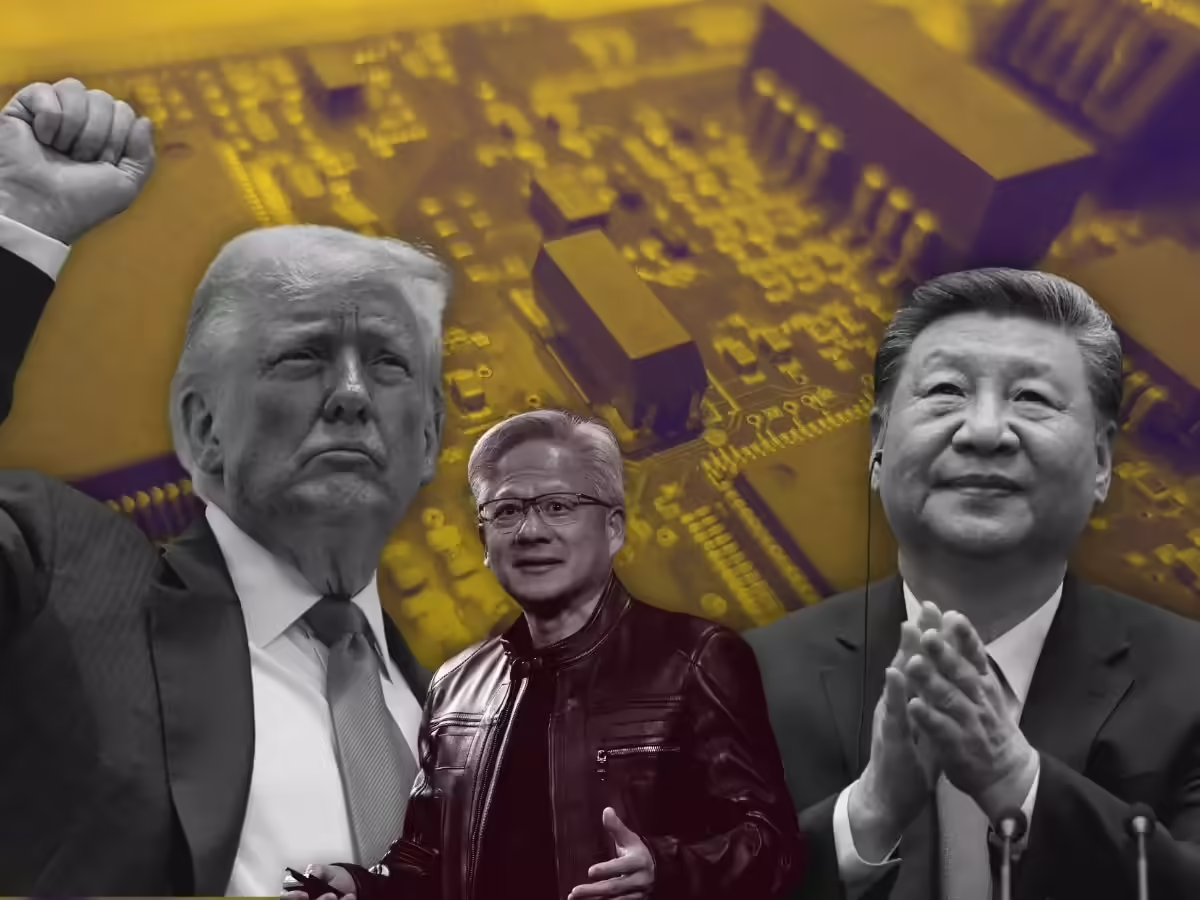
President Donald Trump has departed for a high-stakes diplomatic trip to China, accompanied by a surprise high-profile guest: Nvidia CEO Jensen Huang.
The inclusion of the tech leader on Air Force One signals a potential shift in how the administration handles the ongoing tech rivalry between the United States and China.
Huang was seen boarding the presidential aircraft as the delegation prepared for a visit expected to focus heavily on trade, security, and the future of artificial intelligence.
Key Members of the Diplomatic Delegation
The trip features a mix of government officials and industry leaders aimed at addressing complex economic dependencies.
- Donald Trump: President of the United States leading the trade negotiations.
- Jensen Huang: CEO of Nvidia, representing the interests of the American semiconductor industry.
- Trade Advisers: Multiple senior staff members focused on market access and intellectual property.
The Intersection of Diplomacy and Chip Export Controls
Nvidia is currently the world leader in manufacturing the advanced chips required to train and deploy artificial intelligence systems.
The visit comes at a critical time as the U.S. maintains strict semiconductor industry regulations aimed at limiting China’s access to high-end computing power.
Huang’s presence raises questions about whether the Trump administration is considering modifications to these specific export restrictions.
Industry analysts are closely watching the summit to see if Nvidia will be granted broader permissions to sell its hardware to Chinese tech firms.
Market Impact and Investor Reactions
The news of Huang joining the presidential trip has immediately sparked discussions across global financial markets.
Investors are weighing the possibility of a “grand bargain” that could reopen one of the world’s largest markets for Nvidia’s products.
Currently, the company must navigate a complex web of rules that forbid the sale of its most powerful H100 and B200 chips to Chinese entities.
Strategic Importance of the Beijing Visit
The relationship between the U.S. and China remains the most consequential bilateral dynamic in the global economy today.
This trip aims to address several long-standing friction points, including:
- Trade imbalances and the use of aggressive tariffs.
- Protection of American intellectual property in the tech sector.
- National security concerns regarding the dual-use nature of AI chips.
- Supply chain resilience for critical electronics and raw materials.
Focus on Artificial Intelligence Leadership
The race for AI supremacy is at the heart of the tech cold war between Washington and Beijing.
As the primary supplier of the infrastructure for this race, Nvidia finds itself at the center of geopolitical tension.
By bringing Jensen Huang to the table, the administration may be attempting to use advanced AI technology as a primary bargaining chip in broader trade talks.
Summary of Historical Export Policies
The following table outlines the current landscape of chip exports that the delegation is likely to discuss during the Beijing meetings:
| Control Category | Current Status | Primary Objective |
|---|---|---|
| High-End GPUs | Restricted | Prevent military AI advancement |
| Lithography Equipment | Sanctioned | Limit domestic Chinese manufacturing |
| Cloud Services | Monitored | Restrict remote access to US compute |
Jensen Huang’s Evolving Role in Trade Relations
Jensen Huang has previously expressed the importance of the Chinese market to Nvidia’s long-term growth and stability.
He has often walked a fine line, complying with federal laws while advocating for the ability of American companies to remain competitive globally.
His participation in this official trip marks a significant moment of public alignment between the tech giant and the White House’s economic strategy.
Anticipated Outcomes of the High-Stakes Summit
While the exact itinerary remains confidential for security reasons, several outcomes are being speculated by trade experts.
There is a possibility of a “phase-one” style agreement regarding technology transfers and purchase quotas for American-made semiconductors.
However, critics warn that any easing of export controls could be viewed as a compromise on national security priorities.
The world will be watching as the doors of the Great Hall of the People open to this unique delegation of politicians and tech titans.