US Navy Restricts Amphibious Ship Command to Surface Officers
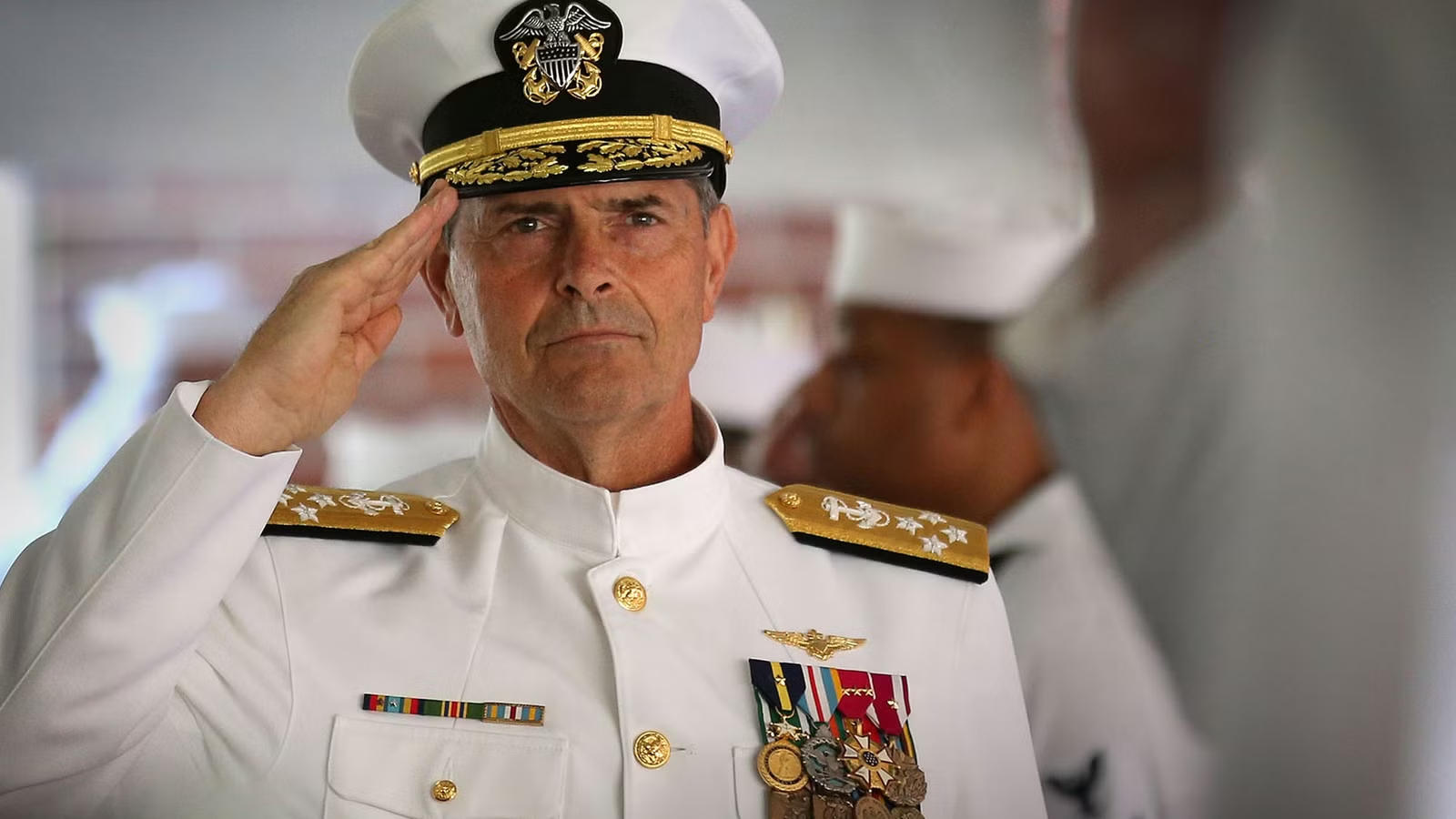
Chief of Naval Operations Adm. Daryl Caudle issued a significant directive on April 24, 2026, regarding the leadership of the United States Navy’s amphibious fleet.
This new order officially restricts the command of amphibious ships to surface warfare officers, effectively ending the practice of allowing aviators to lead these vessels.
The directive aims to address persistent readiness issues within the amphibious fleet by ensuring leadership has specific expertise in surface operations.
Adm. Daryl Caudle Issues Landmark Command Directive
Chief of Naval Operations Adm. Daryl Caudle issued the directive transferring command of the United States Navy’s amphibious fleet exclusively to surface officers.
The policy change was signed in April 2026 to ensure that surface warfare officers lead amphibious ships to solve critical readiness issues.
- Directive Date: April 24, 2026
- Issuing Officer: Adm. Daryl Caudle, Chief of Naval Operations
- Primary Change: Mandates surface warfare officers for amphibious warship command.
- Previous Practice: Command was often held by naval aviators.
Focus on Solving Fleet Readiness and Maintenance Issues
The US Navy mandates surface officers command the amphibious fleet to address specific readiness challenges identified by leadership.
Adm. Daryl Caudle ordered this shift because surface warfare officers possess the technical background required to manage amphibious warships effectively.
By requiring surface officers to lead these ships instead of aviators, the Navy expects to improve the operational status of the fleet.
Operational Specialty and Technical Proficiency
The directive reflects a shift toward prioritizing surface warfare expertise for ships that primarily operate in the maritime domain rather than the air.
This decision aligns with broader goals at the Department of Defense to optimize the command of specialized naval assets.
- Technical Oversight: Surface officers are trained for shipboard mechanical and navigational systems.
- Lethality: Improved readiness is expected to increase the combat effectiveness of the amphibious fleet.
- Strategic Alignment: The move ensures commanders are experts in the specific platform they lead.
Impact on Naval Aviators and Career Paths
Historically, naval aviators held command positions on amphibious assault ships, but this path is now restricted under the new order.
The Navy is currently evaluating how this shift will impact the professional development and promotion tracks for officers in the aviation community.
While aviators lose specific command opportunities, the Navy emphasizes that the priority must remain on the technical readiness of the vessels.
Comparison of Naval Command Structures
The following table illustrates the changes in command eligibility for the US Navy amphibious fleet based on the 2026 directive.
| Feature | Previous Policy | New 2026 Directive |
|---|---|---|
| Command Eligibility | Aviators and Surface Officers | Surface Warfare Officers Only |
| Primary Focus | Mixed Community Leadership | Readiness and Technical Expertise |
| Authority | Standard Community Rotation | Adm. Daryl Caudle (Navy CNO) |
Strategic Move for Amphibious Warships
The amphibious fleet serves as a critical component for transporting personnel and equipment, requiring high levels of operational availability.
Adm. Daryl Caudle’s order is designed to streamline the management of these large-deck vessels to ensure they are ready for deployment at all times.
This policy change is part of a larger effort to enhance Maritime Operational Readiness through specialized leadership roles.
Future Implementation and Fleet Oversight
The US Navy will monitor the transition of command over the coming months to ensure a smooth transfer of responsibilities.
As aviators are replaced, the Navy will focus on training more surface officers to fill the high-demand command roles across the amphibious fleet.
- Monitoring: Readiness metrics will be tracked to measure the impact of the leadership change.
- Training: Enhanced surface warfare training will likely be prioritized for future commanders.
- Policy Extension: The Navy may consider similar specialized command structures for other ship classes.
Conclusion of Navy Command Directive
The April 24 directive by Adm. Daryl Caudle marks a significant turning point in the administrative and operational history of the US Navy.
By restricting amphibious ship command to surface warfare officers, the Navy is prioritizing technical proficiency and shipboard expertise.
This shift is intended to solve the readiness issues that have previously challenged the amphibious warship community.